
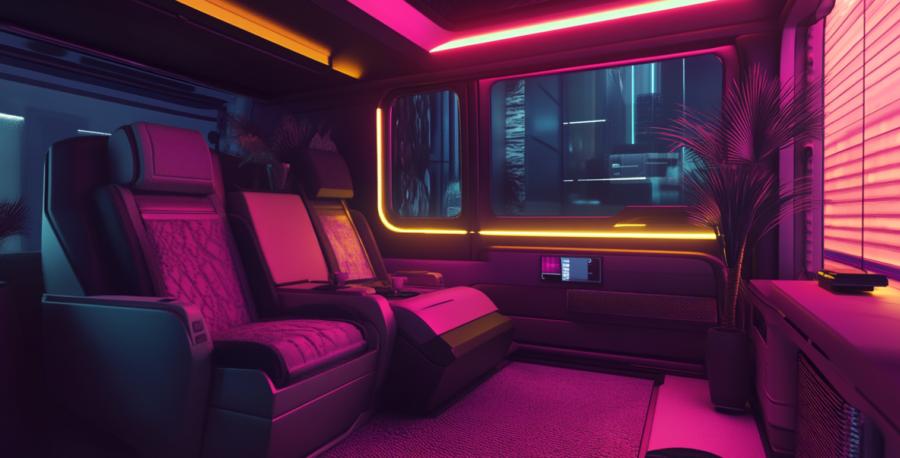
A Cabin with Intent
Most back seats seem built on the assumption that passengers enjoy impersonating luggage. But when intention enters the design process, the cabin transforms. Surfaces become invitations rather than afterthoughts; lighting does more than make you look vaguely human on a late-night call; and ergonomics take on a kind of benevolent authority, nudging your body into healthier postures without lecturing you about it.This is where chromatic shifts quietly work their charm. A gentle transition from crisp cool tones to warmer hues can coax the nervous system into recalibrating. No mystical chanting required—just thoughtful lighting that remembers you’ve already had a day full of intensity and doesn’t want to add more glare to the pile.
Scent, Subtlety, and Sanity
A well-crafted scent profile can function like a whispered reminder that life is not only composed of deadlines. Not the aggressive kind that makes your nose stage a protest, but something more refined—cedar with a whisper of citrus, or lavender softened by a trace of mint. These aromas don’t try to fix your entire worldview; they simply give your brain a brief moment of refuge.Of course, scent can be mischievous. A poorly chosen fragrance can summon memories of an airport restroom or a soap gifted by a relative with questionable taste. But select wisely, and your ride becomes an aromatic shelter, a place where your thoughts can unspool without colliding into each other.
Ergonomics That Actually Care
Ergonomic seating should do more than politely support the spine. It should anticipate the weary slump of someone who has survived three meetings, one crisis, and a surprise snack shortage. Adjustable headrests, lumbar zones that adapt rather than scold, and armrests that don’t force elbows into diplomatic negotiations—all contribute to a sense of being looked after.Designers sometimes forget that the human body has opinions. A smartly designed vehicle honors those opinions without making a spectacle of it. A slight tilt here, a softened edge there, and suddenly the seat starts to feel like a co-conspirator in your attempt to stay functional.
Micro-Rituals for Better Thinking
Small resets restore clarity far more effectively than a frantic attempt to solve every pending issue while bouncing over potholes. A transitional vehicle space encourages micro-rituals—tiny pauses that help thoughts line up like polite guests instead of rioting in your mind.- A brief breathing exercise guided by shifting cabin colors
- A few handwritten notes on a smooth pull-out surface
- A moment of quiet with noise-reduced surroundings
Lighting That Knows When to Behave
Some lighting systems seem convinced you enjoy being interrogated, blasting you with the luminous enthusiasm of a search party. But a transitional lounge-on-wheels understands restraint. Soft gradients, indirect sources, and gentle dimming patterns help the mind recalibrate without announcing their presence like overconfident stage lights.When illumination behaves, it becomes a cue for your brain to shift gears. Even a subtle change in color temperature can remind your senses that you’re between worlds—leaving one demand behind, preparing for the next, and taking a rare moment to exist without performing.
Soundscapes that Don’t Interrupt Your Thoughts
A transitional vehicle doesn’t aspire to be a nightclub or a dentist’s waiting room. Instead, it leans into the art of acoustic neutrality. Noise-dampening materials mute the city’s enthusiasm for honking, while soft ambient options provide a comforting auditory backdrop without hijacking your attention.The goal isn’t to flood you with inspirational tunes or force you into meditative enlightenment. It’s simply to nudge noise levels into a range where your thoughts can stretch their legs without tripping over each other. When the external clamor settles, even for a short ride, your mental bandwidth returns from whatever corner it was hiding in.
Tech That Helps Without Showing Off
The best in-car tech for transitional spaces is the kind that doesn’t demand applause. A discreet screen that tucks away when not needed, controls that don’t behave like puzzle boxes, and connectivity that works quietly in the background—all contribute to a smoother reset.A calm mind doesn’t flourish when forced to battle a menu system that behaves like it resents being touched. Thoughtful tech design keeps interactions short, pleasant, and optional. After all, the goal of this environment is not to engage every sense at once; it’s to give each sense just enough space to unclench.
Gliding Toward a Better Headspace
Some rides feel like logistical necessities; others become small sanctuaries. When designers treat the cabin as a transitional zone rather than a mobile chair collection, riders gain a pocket of time where the mind can sift, settle, and—on particularly good days—spark new clarity.That tiny exhale at the beginning of the journey becomes the emblem of what follows: a quiet reset, a little comfort, and a brief but meaningful shift back toward equilibrium. In a schedule full of intensity, the moving lounge earns its place as an unlikely ally.
Driving Home the Point
If a vehicle can offer even ten minutes of mental restoration, it becomes more than transportation. It’s a buffer between demands, a bridge between meetings, and a traveling refuge where you can gather yourself before re-entering the fray. And while the world outside may continue its enthusiastic chaos, the quiet interior—balanced scents, gentle hues, supportive seating, restrained tech—provides something rare: a chance to return to your next task feeling like a refreshed human rather than a heavily caffeinated approximation of one.Article kindly contributed by londonvipchauffeur.com – providers of londonvipchauffeur.com/corporate-chauffeur-london