
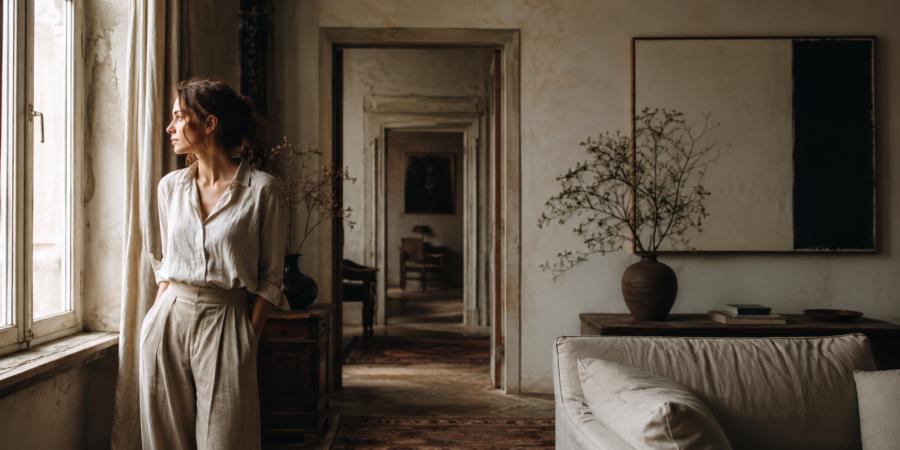
Photography and interior design appear to live in separate neighborhoods. One deals with people and fleeting moments, the other with walls, furniture, and rugs that somehow cost the same as small hatchbacks. Yet both rely on the same quiet principles. Balance, space, texture, and movement shape how we feel inside a room and how we respond to an image.
Photographers chasing natural portraits often focus on expressions or technical settings while overlooking the environment surrounding a person. Interior designers rarely make that mistake. They understand that atmosphere is not an accessory. It is the structure holding the experience together.
Balance Beyond Perfect Symmetry
Balance in photography is frequently misunderstood as symmetry. Place someone in the center, line everything up, and the image behaves itself. There is nothing wrong with that approach, but it can sometimes feel more like a passport office than a lived moment.Interior designers often create balance without making everything identical. A large sofa may be offset by lighter chairs, open floor space, or layered lighting. The eye moves comfortably without feeling trapped inside a ruler’s daydream.
The same principle works when photographing people. A subject positioned slightly off-center can create a stronger emotional connection if surrounding elements support the composition. A doorway, window, or stretch of wall may quietly steady the frame without stealing attention.
Some of the most engaging portraits carry a slight visual tension. They breathe because the photographer resisted the urge to tidy every corner like a guest arriving for inspection.
Negative Space Has Excellent Manners
Empty space has a reputation problem. Many assume a frame should be filled aggressively, as though blank areas might file a formal complaint.Interior designers know otherwise. Space around objects allows them to matter. A crowded room exhausts the eye. A crowded photograph does the same.
Negative space creates emotional breathing room. It gives gestures and expressions greater weight. A person sitting beside a large window or standing against an uncluttered background can appear thoughtful, calm, or quietly powerful without performing for the camera.
This is not merely aesthetic preference. Space influences mood. When viewers are not overwhelmed by visual noise, they notice smaller details: folded hands, shifting posture, or the slight pause before laughter arrives. Those details often hold the real story.
Minimal surroundings do not mean sterile surroundings. Interior spaces feel inviting because emptiness is used with intention, not fear. Photography benefits from the same restraint.
Texture Tells Stories Without Speaking
Texture is where photographs begin to feel less manufactured and more inhabited. Interior designers rely on texture constantly. Linen softens a room. Weathered wood introduces history. Smooth surfaces can feel modern or distant depending on what surrounds them.People exist within these visual surfaces, and photographs become richer when those layers are acknowledged rather than erased.
A portrait taken beside peeling paint, brushed fabric, stone walls, or worn furniture carries sensory depth. Viewers may not consciously catalogue every detail, but they respond to the feeling created by those surfaces. Skin beside rough textures gains contrast. Soft clothing against hard architectural lines creates visual dialogue.
There is also something reassuring about environments that show signs of use. Perfect spaces can feel intimidating. They whisper rules. Lived-in spaces offer permission.
This matters particularly in people photography. Subjects often relax when surroundings feel authentic rather than staged to within an inch of their patience.
Retouching and overly polished settings can flatten personality. Texture restores dimension. Not every crease needs diplomatic intervention.
Flow Shapes the Emotional Journey
Interior design pays close attention to movement. A successful room guides people naturally from one area to another. Furniture placement, sight lines, and proportions all encourage flow.Photographs guide movement too, though the travel happens inside the frame.
Lines, shapes, and spatial relationships influence how the eye wanders through an image. A staircase, corridor, shadow, or line of sight can gently direct attention toward a subject without announcing itself like a traffic officer with a megaphone.
Serious portrait work benefits from understanding this principle. When visual pathways are ignored, images may feel static or emotionally disconnected. When flow is considered carefully, photographs become immersive.
A candid image of someone reading near a window may succeed not because of expression alone but because light, framing, and surrounding forms quietly lead viewers toward that intimate moment.
Designers understand that experience unfolds gradually. Photography works the same way. A strong image invites exploration rather than delivering everything at once.
Rooms Do Not Pose and People Should Not Need To
Many photographers spend considerable effort directing people into prescribed poses. Sometimes this is necessary, particularly for formal portraits or commercial work. Yet rigid direction can produce images that look technically competent and emotionally vacant.Interior designers do not arrange rooms solely for photographs. They design spaces people can inhabit. The result feels convincing because function and atmosphere exist together.
Photographing people through this lens changes the approach entirely.
- Observe how subjects naturally occupy space before adjusting anything
- Use surroundings as compositional partners rather than background decoration
- Allow gestures and interactions to develop organically
- Accept that slight unpredictability often improves the frame
Picture Perfectly Unperfect
Photographing people becomes more rewarding when borrowed lessons from design are allowed into the process. Balance provides stability without stiffness. Negative space creates calm. Texture introduces honesty. Flow encourages emotional movement.These principles do more than improve composition. They encourage patience and observation. Instead of treating people as objects to arrange, photographers begin to see them as part of an environment filled with subtle relationships and quiet signals.
Rooms and portraits share a surprising truth. Neither feels memorable because everything was flawless. They stay with us because something inside them felt real, comfortable, and alive. Even the chair in the corner knows that perfection is overrated. It simply keeps that opinion to itself.
Article kindly provided by emma-janephotography.co.uk