
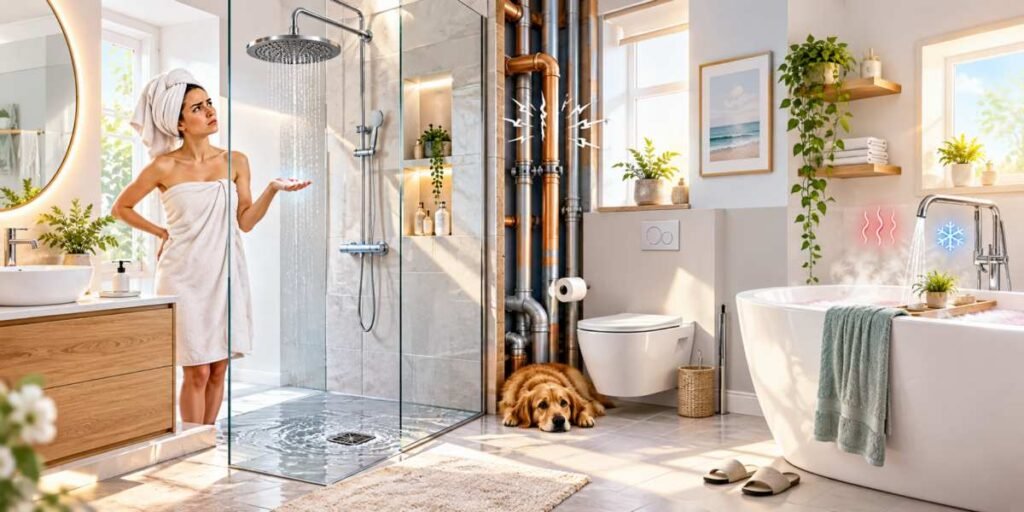
The consequences often become apparent only after the decorators have departed, the photographs have been taken and somebody attempts to enjoy their first shower. Suddenly, that magnificent rainfall showerhead produces little more than an apologetic drizzle.
When Beautiful Bathrooms Forget About Water Pressure
Oversized showerheads, multiple body jets and freestanding baths are increasingly popular features in contemporary bathrooms. However, their performance depends on the available water pressure, flow rate and hot water capacity. Installing elaborate fixtures without checking these fundamentals can produce disappointing results.A large rainfall showerhead requires sufficient water flow to operate effectively. Where supply pressure is inadequate, the experience may resemble standing beneath a particularly indecisive cloud. Similarly, running several outlets simultaneously can expose limitations in pipe sizing or the property’s water supply.
Before selecting fixtures, homeowners should ask a qualified plumber to assess the existing system. Measuring pressure and flow, examining pipework and checking hot water production capacity can prevent expensive mistakes. Sometimes a modest showerhead matched to the available supply performs considerably better than an extravagant alternative.
The Mysterious Orchestra Behind the Walls
Noisy plumbing can transform an otherwise peaceful home into a building apparently occupied by an enthusiastic percussionist. Pipes may rattle, knock or vibrate whenever taps are operated, toilets are flushed or appliances complete their cycles.These disturbances can result from inadequately secured pipework, excessive water pressure, sudden valve closures or thermal expansion. Poorly positioned pipes may also transmit sound through lightweight walls and floors, particularly where plumbing runs close to bedrooms.
Thoughtful renovation planning should include suitable pipe clips, appropriate insulation and careful routing away from noise-sensitive areas. Where necessary, pressure regulation and measures to control water hammer can reduce disturbances. Acoustic insulation around waste pipes can also make a noticeable difference, especially in multi-storey properties.
Why That Stylish Shower Takes Forever to Drain
Walk-in showers with discreet linear drains can look exceptionally elegant. Unfortunately, achieving a minimalist appearance sometimes encourages designers to overlook the practical requirements of drainage.Insufficient floor gradients, undersized waste pipes and poorly arranged connections can cause water to accumulate rather than disappear efficiently. A shower floor that looks perfectly level in photographs may become a shallow paddling pool during actual use.
Drainage design must account for the expected water discharge, suitable pipe gradients, accessible traps and effective waterproofing. Particular care is required when installing low-profile shower trays or converting existing bathrooms into wet rooms, where available floor depth may restrict drainage options.
Addressing these requirements before tiling begins is considerably easier than dismantling an expensive bathroom to correct a persistent drainage problem. The most successful designs conceal the engineering without compromising its performance.
The Long Wait for Hot Water
An impressive bathroom positioned at the opposite end of a property from its hot water source can introduce an unexpected daily irritation. Turning on the tap may involve waiting thirty seconds or longer before warm water arrives, wasting both time and water. During winter, the experience can feel like negotiating with an exceptionally stubborn boiler.Long pipe runs, inadequate insulation and inefficient distribution layouts contribute to these delays. Heat escapes from standing water inside pipes, meaning the cooled contents must be discharged before freshly heated water reaches the outlet. Where several bathrooms are involved, the cumulative waste can become substantial.
Designers should consider hot water distribution during the earliest planning stages. Shorter pipe routes, correctly sized pipework and suitable insulation can improve performance. Larger properties may benefit from carefully designed secondary hot water circulation systems, although their energy consumption and controls require proper consideration. Positioning frequently used fixtures closer to the hot water source can sometimes provide a simpler solution.
Beautiful Fixtures in Ridiculous Places
Interior design photographs rarely show somebody attempting to wash their face in a basin positioned beneath an inconvenient shelf. Nor do they demonstrate the difficulty of cleaning behind a fashionable freestanding bath installed three centimetres from a wall.Fixture positioning influences everyday comfort considerably more than many renovation plans acknowledge. Toilets require adequate surrounding space, basins need practical access, and shower controls should ideally be reachable without stepping directly beneath cold water. Towel rails positioned inconveniently far from showers can turn a perfectly ordinary morning into an unnecessary expedition.
Before finalising a layout, homeowners should consider how each fixture will actually be used. Checking clearances, door movements, storage access and cleaning requirements can expose weaknesses that attractive architectural drawings conceal. A few minutes spent physically imagining daily routines may prevent years of minor irritation.
Temperature Surprises Nobody Ordered
Few domestic experiences are quite as memorable as a comfortable shower suddenly becoming freezing cold because somebody has opened another tap. Unexpected temperature fluctuations can result from pressure imbalances, inadequate hot water capacity or unsuitable mixing arrangements.Thermostatic shower valves can help maintain a consistent outlet temperature, provided they are compatible with the plumbing system and installed correctly. Properly balanced supplies, suitable pipe sizing and sufficient hot water generation are equally important. In households with several occupants, simultaneous demand should be considered rather than assuming that every bathroom will operate independently.
Temperature stability is also a safety consideration. Sudden bursts of excessively hot water can cause scalding, particularly among children and older people. Appropriate temperature controls and professional commissioning should therefore be treated as essential requirements rather than optional luxuries.
Putting Comfort Back in the Pipeline
Successful renovations require cooperation between interior designers, plumbers and other trades before construction begins. Plumbing routes, drainage gradients, isolation valves, maintenance access and fixture specifications should be established alongside aesthetic decisions, not improvised after expensive materials have been ordered.Homeowners should also insist on accessible service points. Concealed cisterns, built-in baths and minimalist fittings can remain visually attractive while incorporating discreet removable panels. Without these provisions, an inexpensive repair may require destructive work simply to reach a faulty component.
A genuinely comfortable home should operate quietly, deliver water at predictable temperatures, drain efficiently and allow routine maintenance without unnecessary disruption. Attractive finishes certainly matter, but their value diminishes when everyday functionality has been sacrificed.
Ultimately, good plumbing is rather like good lighting: people notice its absence far more readily than its presence. The finest interiors are not merely impressive to photograph. They are pleasant to inhabit, economical to operate and sufficiently well considered that nobody has to apologise to visitors for the shower.
Article kindly provided by safeplumbersglasgow.com