
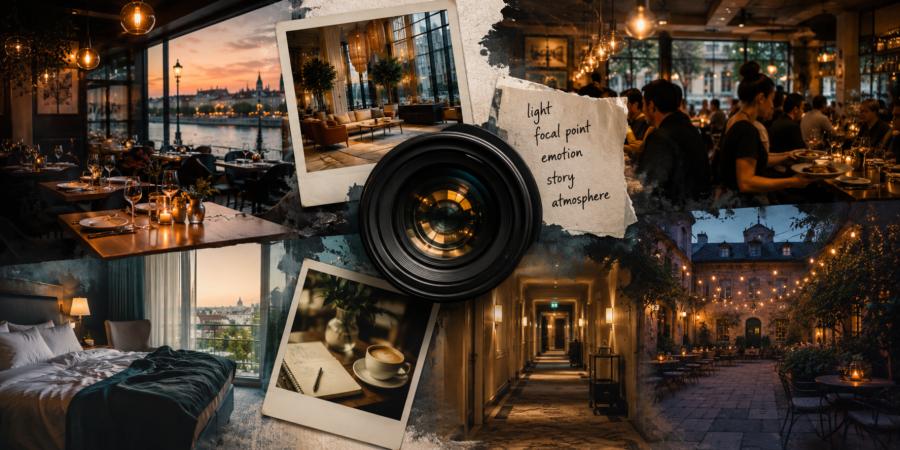
Hospitality spaces provide some of the clearest lessons in atmosphere because they are designed around experience. A hotel lobby is not merely a room with seating and an alarming number of decorative cushions. It is a carefully shaped mood. A restaurant is not simply somewhere to eat. It is often an emotional stage where lighting, layout, and movement quietly influence how people remember their time there.
Lighting Writes the First Sentence
Light is usually the first storyteller in any photograph. Hospitality spaces rely heavily on it because atmosphere changes dramatically depending on how light behaves.Consider a softly lit restaurant at dusk. Warm light spilling across wooden tables suggests intimacy and comfort. Shadows soften edges and encourage attention toward faces, food, and small details. Photograph that same room under harsh overhead lighting and the mood may shift from elegant retreat to waiting room with expensive chairs.
This is not merely an artistic preference. Light directs emotion. Bright, evenly lit spaces often feel open, efficient, and social. Lower light can feel private, luxurious, or mysterious. Natural light can make a hotel suite feel honest and breathable, while controlled artificial light can make a bar feel cinematic enough that even a bowl of olives begins to look like it has a backstory.
Professional photographers often spend more time studying light than equipment specifications. Cameras matter, certainly, but light determines whether an image whispers, sings, or accidentally shouts.
Focal Points Give Atmosphere Direction
Atmosphere becomes difficult to understand when a photograph has nowhere for the eye to settle. Hospitality photography teaches this lesson quickly.A successful image usually offers a focal point that anchors the experience. That point may be a glowing reception desk, a beautifully prepared dining table, or a single chair positioned beside a rain-speckled window. Without direction, viewers often scan an image and move on before any emotional connection forms.
This does not mean every photograph requires theatrical staging. Quite the opposite. Strong focal points often emerge from restraint. A hotel corridor photographed with careful symmetry can create anticipation. A café image centred on a steaming cup beside scattered notebooks can suggest comfort and routine without showing an entire crowd.
Hospitality spaces reveal something important here. People do not remember every detail of an experience equally. They remember moments. Visual storytelling works in much the same way.
Emptiness and Activity Tell Different Stories
One of the more interesting choices in photographing atmosphere involves deciding whether people should appear at all.An empty restaurant photographed before opening can feel peaceful and refined. Chairs aligned neatly beneath soft lighting suggest preparation and possibility. The room waits, almost holding its breath.
The same restaurant during peak service tells another story entirely. Motion, conversation, and layered activity create energy. Glassware catches light, servers move through the frame, and guests lean toward one another in conversation that probably began with sensible topics and somehow reached conspiracy theories about parking meters.
Neither approach is automatically better. Each communicates a different emotional truth.
Empty spaces often invite projection. Viewers imagine themselves stepping into the scene. Busy spaces provide evidence of life and experience. Hospitality photography frequently alternates between both approaches because atmosphere is rarely one-dimensional.
Public spaces demonstrate this especially well. A quiet hotel courtyard at sunrise communicates calm. That same courtyard filled with guests during an evening event speaks of connection and celebration.
Mood Rings and Menu Things
Emotional cues often hide in details that receive little conscious attention.Colour temperature influences comfort. Composition shapes tension or ease. Texture contributes depth. Reflections on glass, folded linens, worn wooden surfaces, and carefully placed objects all participate in storytelling.
Hospitality venues understand this instinctively because atmosphere affects behaviour. Guests linger longer in spaces that feel welcoming. Visitors form impressions within seconds. Photography preserves and communicates those impressions.
What makes atmosphere so fascinating is that photographs never capture the complete experience. They cannot reproduce sound, temperature, or scent. Yet they do something equally powerful. They invite imagination to finish the story.
Perhaps that is why memorable photographs of hotels, restaurants, and public spaces stay with us. They are not recording rooms alone. They are translating feeling into visual form, proving that atmosphere is not invisible after all. It simply prefers speaking through light, detail, and carefully chosen moments rather than announcing itself with a megaphone and dramatic entrance music.
Article kindly provided by gdholland.co.uk